
Note: Aboriginal and Torres Strait Islander readers are advised that the following content contains images and names of people who have died. They are honoured in-memoriam.
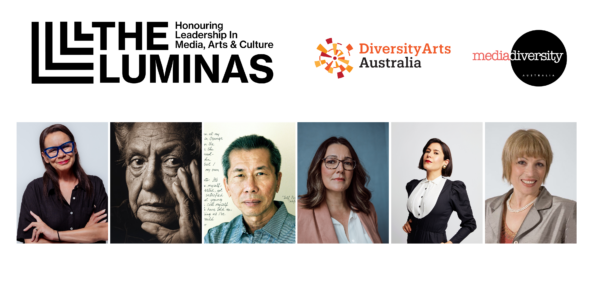
Celebrating Impact and Legacy: Trailblazers transforming Australia’s arts, screen and media landscape
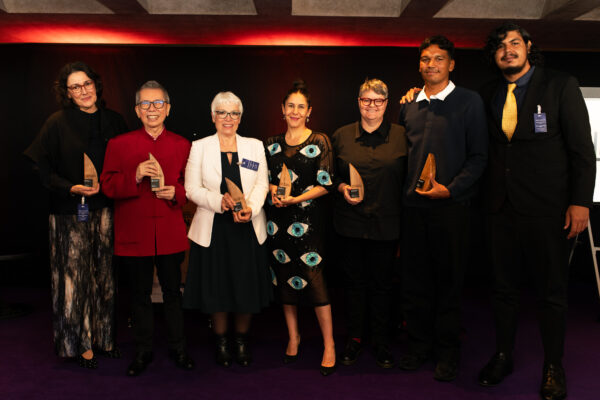
The Luminas, a new national honours program presented by Diversity Arts Australia (DARTS) and Media Diversity Australia (MDA), announced its 2026 honourees, recognising exceptional First Nations and culturally diverse leaders shaping Australia’s cultural and media landscape.
The inaugural Luminas ceremony, held at the iconic Sydney Opera House on 30 April 2026, marks the beginning of a new national tradition of recognition, spotlighting visionary storytellers, changemakers and innovators whose work redefines representation and cultural expression across the nation.
2026 LUMINAS HONOUREES
|
CATEGORY |
ARTS/CREATIVE |
MEDIA |
|
Storyteller |
||
|
Leadership |
||
|
Hall of Fame |
The Luminas is the first national honours program of its kind dedicated to celebrating the contributions of First Nations and culturally diverse leaders across arts, screen and media.
Across three categories, Storyteller, Leadership and Hall of Fame, each honour recognises excellence across the creative industries and media sectors, reflecting the depth and richness of Australia’s diverse cultural life, from bold storytelling to transformative leadership and lifelong achievement.
Diversity Arts Australia (DARTS) CEO and Executive Producer Lena Nahlous said:
“We’re proud to be producing this inaugural event, the first of its kind on this continent. It’s timely and necessary that we recognise and honour First Nations and culturally diverse communities, their labour, creativity and contribution to the arts and media. These are challenging times, and this event creates a moment that is intentionally celebratory, recognising what has been built and who has made it possible.”
Media Diversity Australia (MDA) CEO Paula Kruger added:
“The Luminas program shows all First Nations and culturally diverse people in Australian media that we see your work, we know your worth, and we value the way you kindle the potential of those around you. Our honourees today are fine examples of the Luminas spirit, and Media Diversity Australia looks forward to recognising many more of them in the future.”
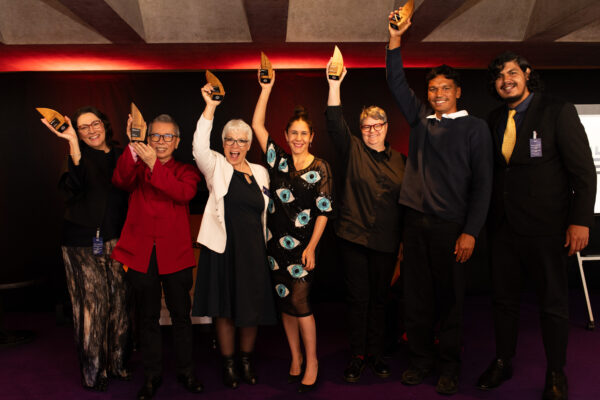
The Luminas 2026 Arts / Creative Honourees
William Yang Storyteller
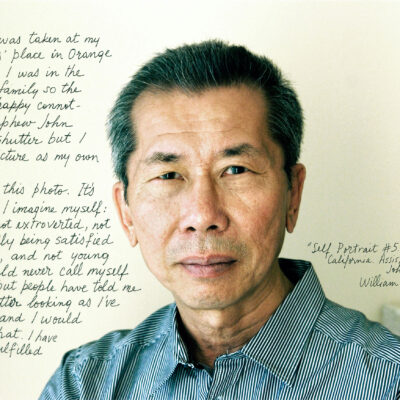
Image: William Yang. Self Portrait #5 2008 © William Yang
Born 1943, Mareeba, Queensland. Lives and works Sydney, New South Wales.
William Yang is principally known as a photographer exploring issues of cultural and sexual identity, integrating this practice with writing, performance and film. Starting out as a playwright, Yang turned to photographing parties and social events as a way of making money. His 1977 exhibition, Sydneyphiles, and 1984 book Sydney Diary, recorded the emergent gay community and Sydney party scene of the 1970s and 1980s. In the 1980s, Yang began to explore his Chinese heritage, and his photographic themes expanded to include landscapes and the Chinese in Australia.
Yang began performing monologues with slide projections in theatres in 1989, integrating his skills as a writer and a visual artist. These slide shows were recognised as a unique form of performance theatre and have since become his preferred way of showing his work. Yang has toured Australia and the world with shows such as Sadness, Friends of Dorothy, The North, Blood Links and Shadows.
Significant exhibitions featuring Yang’s work include Life Lines (part of The China Project), Queensland Art Gallery | Gallery of Modern Art, Brisbane (2009); Claiming China, Australian Centre for Photography, Sydney (2008); Diaries, State Library of New South Wales, Sydney (1998); Sydney Photographed, MCA, Sydney (1994); From Bondi to Uluru, Higashikawa Arts Centre, Hokkaido (1993); Sydneyphiles, Australian Centre for Photography, Sydney (1977); A Chinese Legacy, University of Queensland, Brisbane (2007); World Without End, Art Gallery of New South Wales, Sydney (2000); On the Edge: Australian Photographers of the Seventies, San Diego Museum of Art, San Diego (1998); and Art in the Age of AIDS, National Gallery of Australia, Canberra (1994).
Yang’s work is held in the collections of many institutions including the National Gallery of Australia, Canberra; National Library of Australia, Canberra; National Portrait Gallery, Canberra; Art Gallery of New South Wales, Sydney; Queensland Art Gallery | Gallery of Modern Art, Brisbane; State Library of New South Wales, Sydney; National Gallery of Victoria, Melbourne; Higashikawa-cho Municipal Gallery, Hokkaido, Japan; and Tokyo Metropolitan Museum of Photography, Japan.
Rhoda Roberts AO Leadership
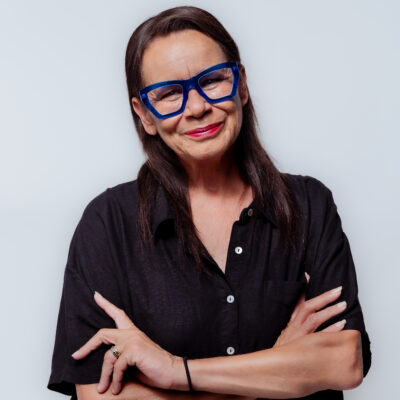
Note: This page contains images and the names of Aboriginal people who have passed.
Image: Widjabul Wieybal woman from the Bundjalung nation, Rhoda Roberts, AO. Photo credit: NITV
Rhoda Roberts AO was a trailblazing figure in the Australian arts landscape and a proud member of the Bundjalung nation, Widjabul clan of Northern NSW and South East QLD. She led First Nations Programming at the Sydney Opera House, served as Festival Director of the Boomerang Festival / Bluesfest, and Creative Director of the Parrtjima Festival (NT).
A highly awarded arts executive, Rhoda received an Order of Australia (AO) for distinguished service to the performing arts, leadership, advocacy, and promotion of contemporary Indigenous culture. Her accolades also include the Ros Bower Award (2019), Helpman Award – Sue Nattrass Award (2018), Deadly Award for Broadcasting (1998), and Sidney Myer Facilitators Award (1997).
With decades of national and international experience across theatre, film, television, radio, and major events, Rhoda was a sought-after speaker, performer, and consultant. She was the first Aboriginal host of a national prime-time current affairs program, a co-founding member of The Aboriginal National Theatre Trust, and produced the weekly national ABC Radio program Deadly Voices from the House.
Rhoda’s creative leadership spans major cultural events including the Sydney Olympic Games, Rugby World Cup 2003, Athens Handover Ceremony, Vivid Sydney, Dubai Expo 2021, and multiple large-scale festivals such as Garma Festival, Sydney Dreaming Festival, and QPAC Clancestry Festival. She has also directed and written multiple theatre productions, including Yarrabah the Musical, Opera Miricoloa (Brisbane Festival 2009), Natives Go Wild (Sydney Opera House 2019), and developed The Indigenous World Art Orchestra.
In media, Rhoda has worked as a journalist, producer, and host for SBS, NITV, ABC Radio, and Network Ten, creating documentaries and series that highlight Indigenous stories and culture. She is widely recognised for coining the term “Welcome to Country”, establishing protocols that are now standard across arts and media industries.
Rhoda sat on multiple boards, including Welcome to Country.com, NORPA Performing Arts Board, and Screenworks Board, and has previously contributed to Sydney Opera House Trust, Indigenous Tourism Australia, The Dreaming Festival, NAISDA, and The Yothu Yindi Foundation Garma Festival Board.
Oodgeroo Noonuccal Hall of Fame
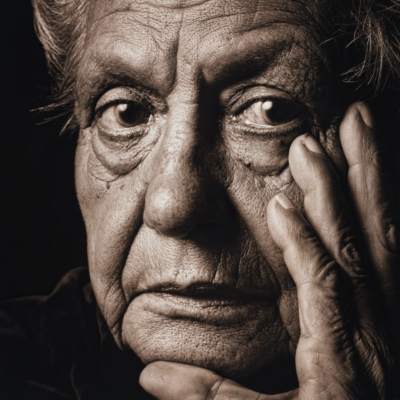
Note: This page contains images and the names of Aboriginal people who have passed.
Photo: Oodgeroo Noonuccal. Photo credit: George Fetting.
Oodgeroo Noonuccal (Kath Walker) (1920–1993), black rights activist, poet, environmentalist, and educator, was born Kathleen Jean Mary Ruska on 3 November 1920 at Bulimba, Brisbane, second youngest of seven children of Edward (Ted) Ruska, labourer, and his wife Lucy, née McCullough. Ted was a Noonuccal descendant, and Lucy was born in central Queensland, the daughter of an inland Aboriginal woman and a Scottish migrant. Lucy, at ten years of age, was removed and placed in an institution in Brisbane, and at fourteen years of age, without the skills to read or write, was consigned to work as a housemaid in rural Queensland.
Ruska’s childhood home was One Mile on North Stradbroke Island or Minjerribah—as it was known by the island’s traditional owners, the Noonuccal. The settlement, on the outskirts of Dunwich, was the setting for Kath’s earliest memories of hunting wild parrots, fishing, boating, and sharing in the community dugong catch. In 1934, at thirteen, she completed her formal education at Dunwich State School. The family, like many enduring the Depression, could not afford the nurses’ training her older sister had received. She left home for Brisbane to work as a domestic for board and lodging, and less pay than white domestics received, but armed with the ability to read and a talent for writing.
In World War II, after her brothers Edward and Eric were captured by the Japanese at the fall of Singapore in February 1942, Ruska enlisted in the Australian Women’s Army Service on 28 July. After initial training as a signaller, she undertook administrative duties and was promoted to lance corporal in April 1943. In June she transferred to the district accounts office where she remained until being discharged on 19 January 1944. She enjoyed team competition, founding a women’s cricko (later vigoro) team, the Brisbane All-Blacks; she would later twice represent Queensland at cricko. On 8 May 1943 at the Methodist Church, West End, she had married Bruce Walker, a childhood friend and a descendant of Aboriginal clans from Queensland’s Logan and Albert rivers region; he was an electric welder. Their union did not last and as a single parent she struggled to provide and care for her son, Denis. A course in stenography led to an office job but, needed at home, she returned to the flexible hours of taking in ironing and cleaning for professional households. She worked for the medical practitioners (Sir) Raphael and Phyllis (Lady) Cilento, whose worldly outlook, spirited family, and book-lined rooms encouraged her own artistic sensibilities. In 1953 she had a second son, Vivian; his father was Raphael Cilento junior (Cochrane 1994, 23).
In the 1940s the Communist Party of Australia—the only political party without a White Australia policy, and which opposed racial discrimination—had attracted Walker. Through the party she gained skills in writing speeches, public speaking, committee planning, and political strategy, which ‘stood me in good stead through life,’ but she left because ‘they wanted to write my speeches’ (Mitchell 1987, 197). Writing prose and poetry, she joined the Brisbane Realist Writers Group. James Devaney encouraged the reluctant writer and sent a selection of her poems to Dame Mary Gilmore. Ninety-four at the time of their meeting, Gilmore said, as Walker later recalled: ‘These belong to the world. Never forget you’re the tool that wrote them down only’ (Mitchell 1987, 198).
At Jacaranda Press in Brisbane, Walker’s poems found an advocate in submissions reader Judith Wright, who recommended publication. In 1964 We Are Going became the first poetry publication by an Aboriginal Australian. Despite the success of that book and The Dawn Is At Hand, which followed two years later, her work was dismissed by many critics as protest poetry. She would nevertheless win the Jessie Litchfield award for literature (1967), a Fellowship of Australian Writers award, and the Dame Mary Gilmore medal. Sales of her poetry were claimed to rank second to Australia’s best-selling poet, C. J. Dennis.
Two years before her first book, in 1962, Walker had been elected Queensland State secretary of the Federal Council for Aboriginal and Torres Strait Islander Advancement, while also a member of the Queensland Aboriginal Advancement League executive. She rose to the call for Aboriginal leadership and, in the early 1960s, travelled around Australia with FCAATSI delegates, among them Faith Bandler, (Sir) Douglas Nicholls, and Joe McGinness. Campaigning for equal citizenship rights, she met with cabinet ministers, led with Bandler a delegation to Prime Minister (Sir) Robert Menzies, and wrote and delivered speeches. The struggle culminated in the landmark 1967 referendum to empower the Federal government to legislate on Aboriginal affairs. This victory was particularly momentous in her home State, where the Aboriginal and Torres Strait Islander populations lived under the all-encompassing authority of ‘The Queensland Acts.’
Walker stood for the Australian Labor Party in the Liberal stronghold of Greenslopes in the 1969 State election, but lost. Her hard-fought campaign for Aboriginal land rights, despite personal assurances of action by a succession of politicians, was slow to gain political support. London’s 1969 World Council of Churches consultation on racism was the first of many international invitations, which over the years would take her to Fiji, Malaysia, Nigeria, the Soviet Union, and the United States of America. My People (1970), a collection combining her two previous books, would be her last poetry for a decade and a half.
Aged fifty, in 1971, suffering ill health and facing challenges for power from younger Aboriginal leaders, Walker returned to Minjerribah. Near One Mile, she assembled a gunyah—a traditional shelter—on negotiated leasehold land, the beginnings of a learning facility, and named it Moongalba (the sitting-down place). Her teaching of Aboriginal culture on country inspired thousands of school children—whom she saw as the bright future—as well as teachers and other visitors who made the barge trip across Moreton Bay. She published two children’s books, Stradbroke Dreamtime (1972) and Father Sky and Mother Earth (1981). In 1983 she stood as a candidate for the Australian Democrats in the State election, without success.
During a tour of China—as part of an Australia-China Council cultural delegation—in 1984 Walker’s enthusiasm to write poetry revived, resulting in the simultaneous publication in Australia and China of Kath Walker in China (1988). She received prestigious awards, including honorary doctorates from Macquarie University (1988), Griffith University (1989), Monash University (1991), and Queensland University of Technology (1992). In 1977 she appeared in a film biography, Shadow Sister; her performance won the 1977 Black Film Makers’ award in San Francisco. She also advised on and acted in Bruce Beresford’s 1986 film The Fringe Dwellers. A veteran environmental campaigner, she spoke against uranium mining and opposed sand mining on Minjerribah. In 1987, in protest at the bicentennial celebration of Australia Day, she famously returned the MBE to which she had been appointed in 1970.
With her son Vivian in 1988 she wrote the script for The Rainbow Serpent Theatre, produced at World Expo ‘88, Brisbane; they wrote under their newly chosen Noonuccal names Oodgeroo (paperbark tree) and Kabul (carpet snake). These last few years together ended in 1991 with Kabul’s AIDS-related death at thirty-eight. Heartsick but resolute, Oodgeroo served as a judge of the David Unaipon award for Indigenous writers, as adviser on a national Aboriginal studies curriculum for teachers, and as patron of Queensland’s first Writers Centre. She died of cancer on 16 September 1993 at the Repatriation General Hospital, Greenslopes, Brisbane. At her funeral on Minjerribah hundreds came to farewell the nation’s much loved poet and activist, who was buried at Moongalba beside Kabul.
In 2006 Queensland University of Technology renamed its Aboriginal and Torres Strait Islander Support Unit the Oodgeroo Unit. Direct, charismatic, quick-witted, and dignified, Oodgeroo taught the spirituality of her ancestors, responsibility for the earth, and the connection of all people. Her poetry and stories continue to inspire. She chose ‘a long road and a lonely road, but oh, the goal is sure’ (Walker 1970, 54).
The Luminas 2026 Media Honourees
Jan Fran Storyteller
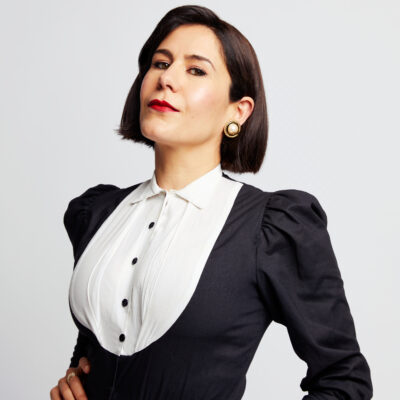
Image: Jan Fran. Photo credit: Monica Pronk.
Jan Fran is a Walkley award-winning journalist, co-founder of Ette Media and host of the We Used to be Journos podcast.
She is known for hosting several prime-time weekly television shows, including SBS’s The Feed, Channel 10’s The Project, and most recently ABC’s Question Everything. She’s also known for her sharp social commentary videos on social media, which attract millions of views.
Across her 15-year career, she’s produced documentaries from around the world, made a number of award-winning podcasts, and is currently writing her first book.
In 2025, she co-founded Ette Media with fellow journalist, Antoinette Lattouf, to help tackle media misinformation and provide much-needed media literacy.
Lorena Allam Leadership
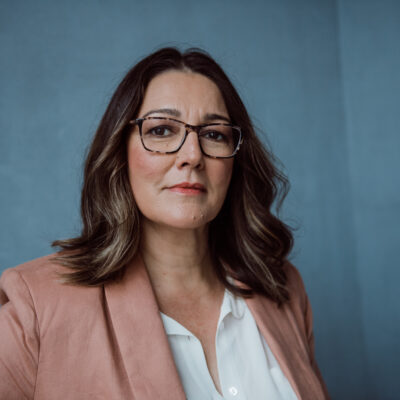
Image: Lorena Allam. Photo Credit: Guardian Australia.
Lorena Allam is a four-time Walkley Award–winning journalist descended from the Yuwaalaraay and Gamilaraay people of northwest NSW, with forty years’ experience working in the media. Until recently The Guardian Australia’s Indigenous Affairs editor, Allam is now Professor of Indigenous truth-telling research at the Jumbunna Institute for Indigenous education at the University of Technology, Sydney.
Lorena’s work at Jumbunna is to produce research and information that will help set the foundations for an ongoing process of truth telling in Australia, and continue to produce impactful journalism about Indigenous issues here and overseas.
Lorena spent 30 years as journalist and broadcaster at the ABC, working in News, Triple J, Radio National, TV and online. Lorena presented and produced Awaye!, Radio National’s Indigenous arts and culture program, for 14 years, and was the program’s first Indigenous executive producer. Lorena worked on many RN programs including Background Briefing, Breakfast, and Earshot, and was ABC Radio’s first Indigenous editor, overseeing all programming, staffing and employment strategies across the division.
In 2018, Lorena joined the Guardian Australia as its first Indigenous Affairs editor, winning four Walkley awards, two Kennedy awards and the NSW Premier’s History award for her reporting on issues including Aboriginal deaths in custody, frontier colonisation, and the Juukan Gorge disaster.
Lorena has trained broadcasters in mainstream and community media, mentored students and currently sits on the board of the Community Broadcasting Foundation.
In forays outside journalism, Lorena worked on the landmark Bringing them home inquiry and helmed the Indigenous collection at the National Film and Sound Archive.
Majida Abboud-Saab OAM Hall of Fame
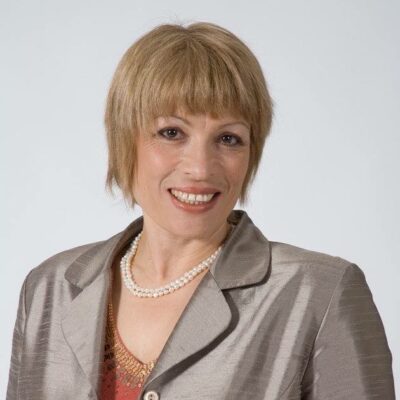
Image: Majida Abboud-Saab courtesy of the honouree.
Majida Abboud-Saab OAM is a pioneer, a legacy in media diversity, social cohesion, leadership and anti-racism, whose extraordinary contribution empowered community pride in languages and shaped our national culture.
For 38 years, Majida Abboud-Saab worked her way up the ranks at SBS while simultaneously working on transforming the broadcaster; a home and information source for Australians embracing diversity through multilingual and multicultural media.
From a volunteer on 2EA Radio at the age of 18 that later evolved into SBS, Ms Abboud-Saab’s impactful career began as a radio broadcast A grade journalist before she stepped up as program manager of all language programs at SBS, then TV producer. Her experience and drive led her to then be promoted to executive producer of the Arabic Language section, where she remained for 21 years.
Her impact was felt in the Arabic programs and other languages at SBS through innovative formats, robust ideas and initiatives helping communities feel more confident by understanding their obligations and rights, and evolving cultural beliefs and values to harmonise their belonging and identities as Australians. On the other hand, informing and facilitating the understandings of other Australians about the significance of multicultural and multilingual contributions to our country. There was no precedent, it was unfolding and unique.
Ms Abboud-Saab migrated to Australia from Beirut in 1967 and is a founding member of the Arab Council of Australia. She was also the Chair of the Media, Entertainment and Arts Alliance at SBS for 20 years. Upon leaving SBS she volunteered in Marine Rescue NSW for six years to help save lives on the water and for eight years with Lifeline to help save lives from suicide. Committed to media excellence, she was a judge on the NSW Premier’s Multicultural Communications Awards for several years.
She received many distinguished awards in media, the arts and innovation for helping diverse communities to be informed to exercise their equal rights and participate in the political, social, economic and cultural life in Australia. She was awarded the Medal of the Order of Australia (OAM) in the 2024 Australia Day Honours for her service to the Arab community and the media. She received the Multicultural Media Awards’ inaugural Multicultural Journalist of the Year award in (2012) and Premier’s Award for Community Harmony Harmony (2011).
Belief in diversity and equity is Majida’s superpower. She believes hope and courage in adversity makes us able to use opportunities to create a better world and do things others think we can’t. She’s grateful to the Arabic community, and people who believe in diversity, multicultural and multilingual supporters of Australia’s identity. Whose support not only encouraged her to share skills, be inspired and inspire, but also to learn and have fun along the way.
Photos
Download official photos from The Luminas 2026 Ceremony. Acknowledge Photo Credits for Photography by Isabella Moore and Benjamin Tiger La, respectively.
Acknowledgements
The Luminas is presented by Diversity Arts Australia and Media Diversity Australia, in partnership with Sydney Opera House, NITV and SBS, with funding from the Office for the Arts, and sponsored by Hachette Australia, WELD Stories and Design Awards. Diversity Arts Australia receives core funding from Creative Australia and Create NSW.
Note: This page contains images and the names of Aboriginal people who have passed on in-memoriam.