
10 July 2026
MEDIA RELEASE | FOR IMMEDIATE RELEASE
New Imagine Canada Case Studies Share Lessons in Indigenous Sovereignty and Cultural Equity
Online launch
Toronto: Wednesday 22 July 2026, 1:30 pm to 3:30 pm (EDT)
Sydney: Thursday 23 July 2026, 3:30 am to 5:30 am (AEST)
Event registration:
https://diversityarts.org.au/event/imagine-talk-transforming-cultural-equity-in-canadian-arts/
Two new Imagine Canada case studies exploring reconciliation, cultural equity, Indigenous leadership and systemic change in Canada’s arts and media sectors will be launched this month.
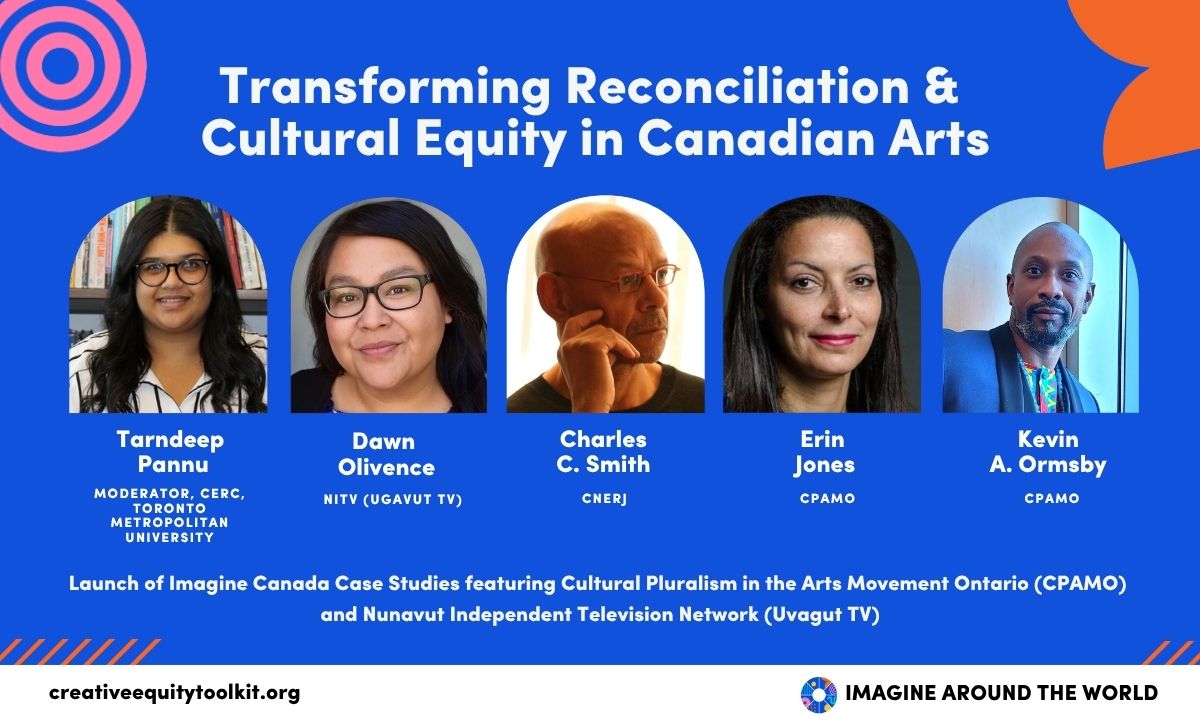
Developed by Diversity Arts Australia (DARTS) in partnership with the Canada Council for the Arts and the Canada Excellence Research Chair in Health Equity and Community Wellbeing at Toronto Metropolitan University, the case studies feature:
- Cultural Pluralism in the Arts Movement Ontario (CPAMO)
- Nunavut Independent Television Network (NITV), which operates Uvagut TV
The case studies document two distinct approaches to determination, sharing power, strengthening community leadership and supporting communities to shape how their cultures and stories are represented.
The CPAMO case study examines more than two decades of work addressing structural barriers faced by Indigenous, Black and People of Colour artists. It explores CPAMO’s approach to organisational transformation, peer learning, leadership development and practical tools that help arts organisations move from equity commitments to sustained action.
The NITV and Uvagut TV case study documents the growth of an Inuit-led broadcaster established in Igloolik to promote and protect Inuktut programming. It explores how Indigenous-led media can support language, storytelling, cultural continuity and collective memory, while giving Inuit artists and communities greater control over how their lives and cultures are represented.
The online Imagine Talk, Transforming Reconciliation and Cultural Equity in Canadian Arts, will bring representatives from both organisations together to discuss cultural equity in practice, community control over stories and institutions, and what arts and media organisations can learn from their work.
Lena Nahlous, CEO of Diversity Arts Australia, said:
“These case studies are not about importing one model into another country, but listening to how communities have responded to exclusion, protected cultural knowledge and created change on their own terms. Sharing this knowledge across borders strengthens international relationships and ensures that people working for cultural and racial equity are not doing it in isolation.”
Elizabeth Logue, Director, Creating, Knowing, Sharing: The Arts and Cultures of First Nations at the Canada Council for the Arts, said:
“These case studies highlight organizations from Canada creating lasting change through Indigenous sovereignty, support for artists and more equitable arts systems. Inspiring further learning, collaboration and action.”
Professor Karen Soldatic, Canada Excellence Research Chair in Health Equity and Community Wellbeing at Toronto Metropolitan University and DARTS Board Director, said:
“Imagine Canada demonstrates the value of international knowledge exchange grounded in community leadership. These case studies show how locally developed approaches to equity can inform wider structural change while remaining connected to the people, cultures and places from which they emerge.”
Lucy Tulugarjuk, Executive Director of Nunavut Independent Television Network, said:
“For Inuit communities, seeing ourselves, hearing our language and sharing our stories is about much more than broadcasting. It is about cultural continuity, identity and pride.”
Kevin A. Ormsby of Cultural Pluralism in the Arts Movement Ontario said:
“Cultural equity requires us to look beyond representation and examine the systems that shape whose stories are valued, whose creativity is supported and who has the power to make decisions.”
The case studies will be featured in DARTS’ Creative Equity Toolkit, an international resource documenting cultural equity practices from around the world. The toolkit includes 74 case studies from 17 countries.
The launch is free and open to arts workers, artists, researchers, cultural organisations, policymakers and community leaders.
ENDS
Media enquiries:
Visit the contact form
About Diversity Arts Australia
Diversity Arts Australia (DARTS) is Australia’s leading national organisation advocating for racial equity and cultural diversity in the arts. Through research, training, partnerships and sector development, DARTS works with artists, organisations and governments to create a more equitable creative sector.
About the Canada Council for the Arts
The Canada Council for the Arts’ mandate is “to foster and promote the study and enjoyment of,
and the production of works in the arts.” Through its grants, services, prizes, initiatives and payments, the Canada Council supports a dynamic and diverse arts and literary scene. These activities generate a meaningful cultural, social and economic impact for over 2,000 communities in all parts of the country and beyond. The investments and leadership of the Canada Council help advance public engagement in the arts from coast to coast to coast while also contributing to the international recognition of artists and arts organizations from Canada.
About the Canada Excellence Research Chair in Health Equity and Community Wellbeing
at Toronto Metropolitan University
The Canada Excellence Research Chair in Health Equity and Community Wellbeing is a prestigious eight‑year program funded by the Canadian Institutes of Health Research (CIHR). It is designed to support world‑renowned researchers in establishing ambitious, interdisciplinary research programs that address pressing equity issues in health and community well‑being.